





Frequently asked questions Hide FAQs
What types of white motorcycle helmets are included in this collection?
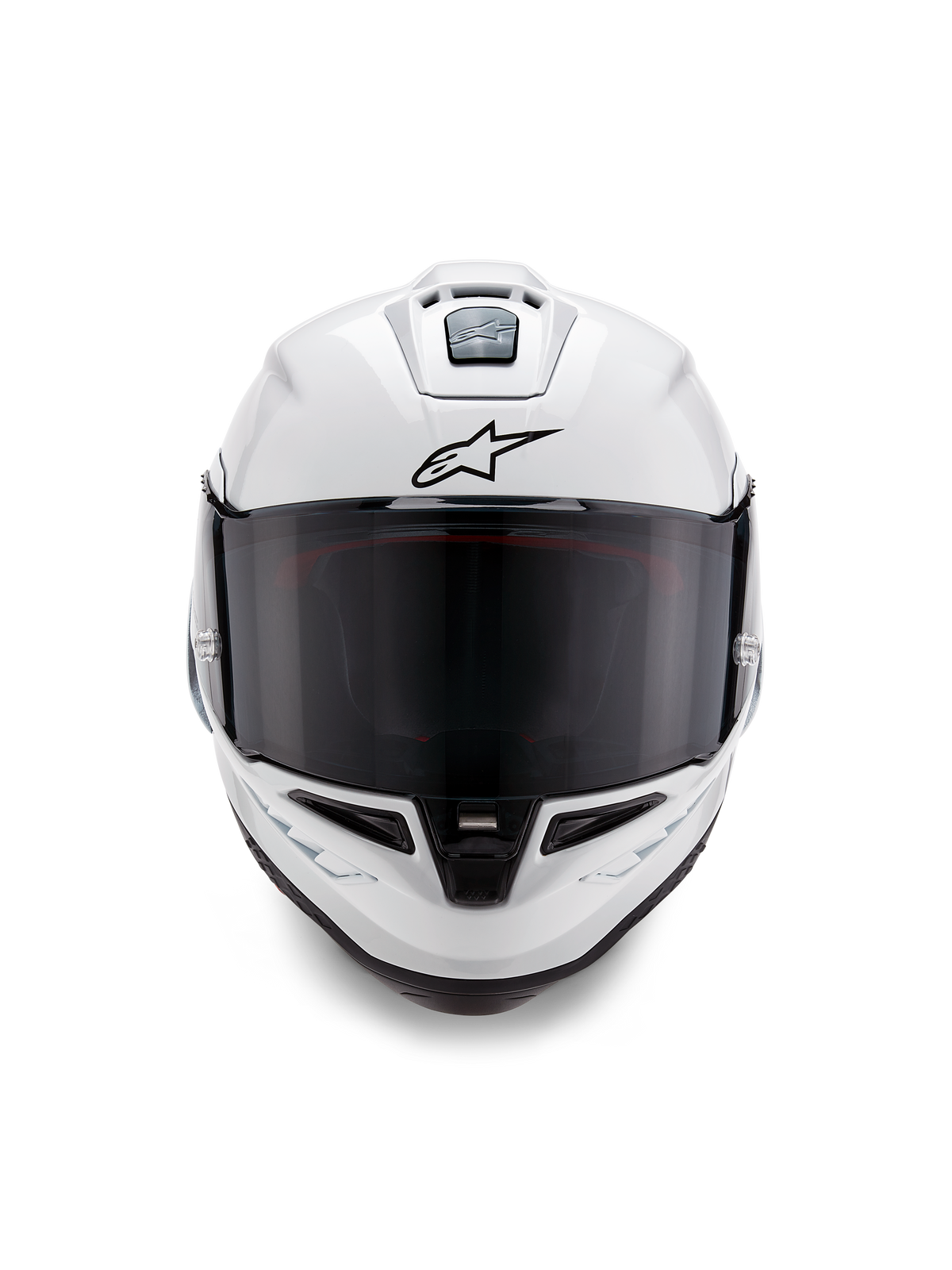
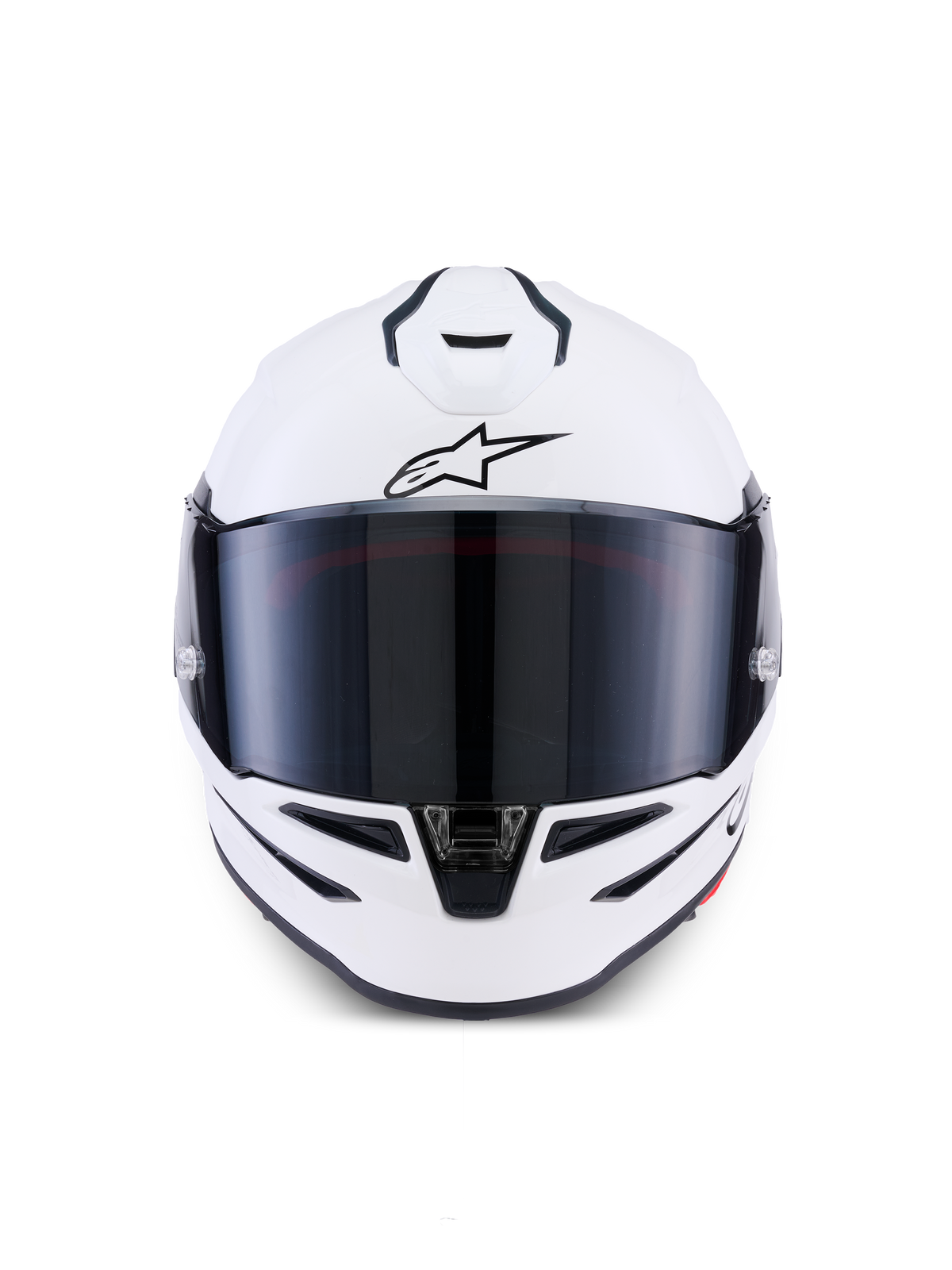
This collection brings together Alpinestars motorcycle helmets in white colorways across key road-riding categories. Depending on availability, that can include full-face helmets for sport and everyday road use, as well as modular helmets designed for riders who want flip-up convenience.
The main difference is riding priority. Full-face designs focus on continuous shell coverage, aerodynamic stability, and visor performance, while modular designs add practical access for communication, fuel stops, and touring use. For a broader view of available formats, explore our motorcycle helmets collection.
Are white motorcycle helmets as safe as other helmet colors?
Yes. Helmet color does not change the core protective function of the helmet. Safety depends first on correct certification, shell and EPS construction, secure retention, proper fit, and the helmet’s condition over time.
White can improve visual conspicuity compared with darker finishes, which is one reason many riders choose it for road use. That said, visibility is only one part of the equation, so the priority should always be fit and the homologation listed on the product page, such as DOT and, where applicable, ECE 22.06.
What is the difference between a white full-face helmet and a white modular helmet?
A white full-face helmet uses a fixed chin bar and is typically chosen for maximum structural continuity, aerodynamic performance, and lower wind exposure at speed. A white modular helmet uses a flip-up chin-bar design, making it easier to speak, take short stops, or manage touring routines without removing the helmet completely.
For sport riding and higher-speed road use, many riders prefer the simplicity and stability of a full-face design. For commuting and touring, modular helmets can offer more day-to-day convenience, provided the rider selects the correct fit and certification for the intended use.
How should a white motorcycle helmet fit, and how do I choose the right size?
A motorcycle helmet should fit snugly with even pressure around the head, without painful pressure points. It should feel secure at the cheeks and crown, and it should not shift excessively when you move your head with the chin strap fastened.
Measure your head circumference and compare it with the size chart on the product page. If you are between sizes, focus on a stable performance fit rather than a loose initial feel, because interior padding typically settles slightly with use. A correct fit should remain comfortable and controlled for at least 20 to 30 minutes before riding.
How do I clean and care for a white motorcycle helmet?
Clean the shell with a soft microfiber cloth, lukewarm water, and mild soap only. White finishes tend to show road film, insects, and exhaust residue more quickly, so regular gentle cleaning helps maintain both appearance and visor clarity.
Avoid solvents, abrasive cleaners, and rough paper products, because they can damage paint, clear coats, visor treatments, and trim. If the helmet has removable comfort liners or cheek pads, follow the model-specific instructions for removal, hand cleaning, and air drying away from direct heat before reassembly.